
Junked: The Life, Death, and Legacy of the Most Important Television Show You’ve Never Seen, bySeth Borgen
This essay appeared in Barrelhouse 26, which you can check out here.
Also check out this amazing interview with author Seth Borgen and no lesser than Tim Reid himself.
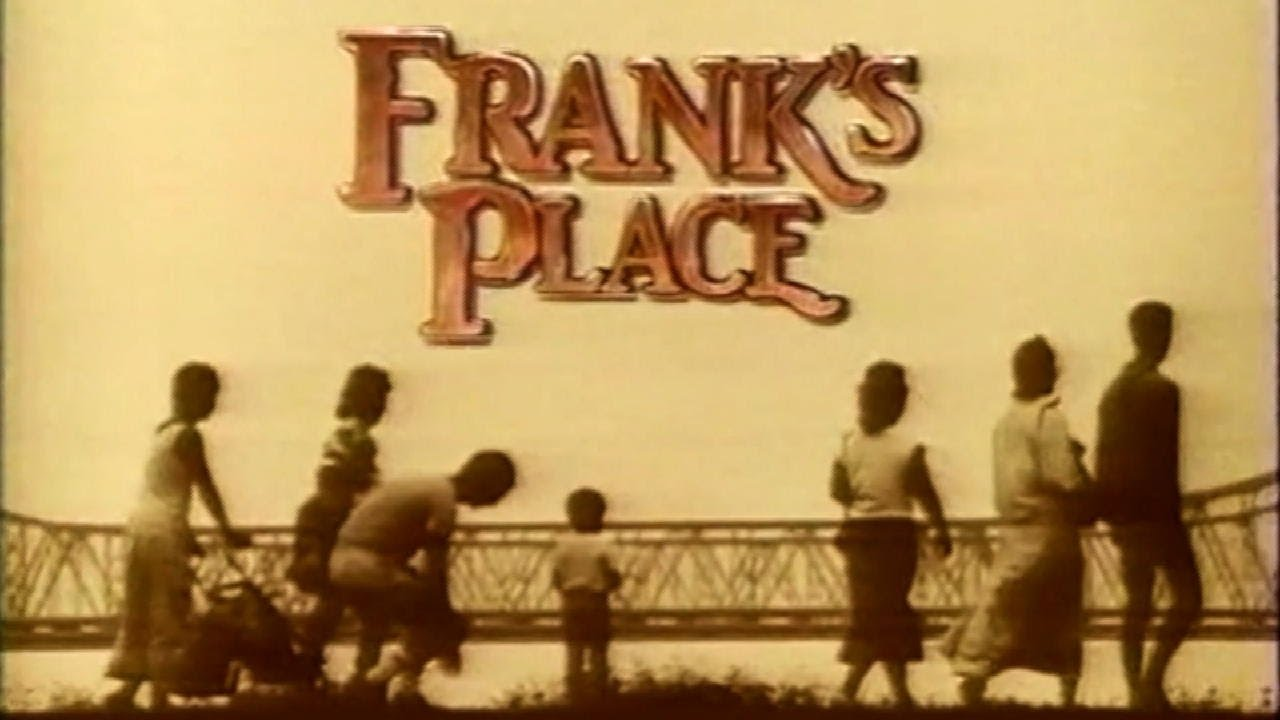
During the 1987-88 television season, CBS ran a show called Frank’s Place, a sitcom about a Creole restaurant in New Orleans. You’ve probably never heard of it. It was one of the first sitcoms shot in the single-camera, no laugh track, no fourth wall, dramedy style that is largely standard viewing today. The almost entirely Black cast portrayed nuanced, dynamic human beings, curiously revolutionary for the late 80s. Critics found the show smart and funny, and the ratings were solid. A second season was days away from filming when CBS suddenly cancelled Frank’s Place.
They said it was ratings.
It wasn’t. We know that now. [1]
In what would turn out to be the series finale, titled “The King of Wall Street,” Frank’s Place took a couple of mild swipes at junk bonds, high-risk, high-yield securities used to finance company takeovers on the quick. The owner and Chairman of CBS at the time, Laurence Tisch, had used junk bonds to buy CBS and took the episode as a personal insult. As a result, he and he alone cancelled Frank’s Place.
In other words, in 1988, the Blackest show on television [2] was cancelled for the whitest possible reason—junk bonds and pettiness.
Frank’s Place was a show that deserved more life than it got. At the very least, the story of its death deserves to be told.
–––––
Frank’s Place was created by Hugh Wilson and Tim Reid. Wilson and Reid met in the late 70s while making WKRP in Cincinnati. On that show, Wilson was the creator and Executive Producer. Reid starred as WKRP disc jockey Venus Flytrap. During WKRP in Cincinnati’s four-year run, Reid and Wilson became close friends. So close, in fact, that Reid and his wife, Daphne Maxwell Reid [3], are godparents to one of Wilson’s children. When WKRP ended, both knew it was only going to be a matter of time before they worked together again.
In 1984, Wilson wrote and directed Police Academy. While it might be fair to say that the Police Academy franchise isn’t for everyone, the first installment was a monster hit that established Wilson as a bankable Hollywood director. Though he would go on to make a number of films that safely qualify as not terrible [4], one gets the sense throughout much of Wilson’s Hollywood career that his heart wasn’t always in it. As for Reid, following his run as the only Black character on WKRP, he became the only Black character on Simon & Simon. Good work for any actor in the mid-80s, particularly considering the lack of diversity on television at the time. But if Reid was looking for something more from his acting career than a steady paycheck, it probably wasn’t going to happen playing a character on Simon & Simon whose last name was not Simon. [5]
Around 1986, both Reid and Wilson found themselves at very similar points in their careers: financially successful and artistically bored. They started kicking around ideas, and they came up with the pitch for Frank’s Place.
–––––
On Frank’s Place, Reid plays the titular Frank—Frank Parrish, an Italian Renaissance History professor born and raised in Boston. When a father he never knew dies, Frank inherits the titular place—a vaunted neighborhood Creole restaurant in New Orleans called the Chez Louisiane (almost exclusively referred to as the Chez). For reasons he does not fully understand, Frank feels compelled to leave behind his old life in Boston and become the new owner/operator of the Chez. [6]
While all of that sounds like a perfectly suitable premise for a 1980s fish-out-of-water sitcom, Frank’s Place wasn’t a sitcom. Not really. Frank’s Place was art.
Watching Frank’s Place today, what really jumps out is the degree to which the show had absolutely no interest in being like anything else on television. It didn’t care if anyone was watching. It didn’t care if those who were watching understood what they were seeing. It really didn’t care if anyone was laughing. And if you were trying to gauge where you were in an episode based on a vague understanding of the traditional three-act sitcom plot structure, kinda go fuck yourself. Episodes were character-driven, human, and beautifully plotless. Not only was there no laugh track to inform the casual viewer when comedy had occurred, Frank’s Place would sometimes purposefully go long stretches with nothing even remotely resembling a joke. And instead of jokes, this thirty-minute sitcom—that aired at 8:30pm EST, between Kate & Allie and Newhart—would often go to some pretty dark places.
Just a couple of examples.
Episode five (“Frank Joins the Club”) delves into the sordid history of New Orleans’ dark-skinned/light-skinned Creole racial hierarchy when Frank is asked to join the Capital C Club, the most exclusive Black men’s club in New Orleans. The club is so exclusive, Frank eventually learns, that he’s something of a guinea pig. If accepted, he’d be the first member that couldn’t pass the brown paper bag test. [7] Upon hearing this, Frank rejects the invitation. “All my life I’ve been, quote, the only black,” he tells a representative of the Capital C Club. “I was the only black in this class. I was the only black in that organization. I was the only black on this team. Look, man, I’m not about to become the only black in a black club.” [8]
In episodes eight and nine (“Cool and the Gang,” parts one and two), the restaurant’s assistant bartender, Cool Charles[9]—a character the audience had barely spent any time with during episodes one through seven—gets humiliated by a sixteen-year-old cocaine kingpin while trying to make a few honest dollars on the side, goes to work for the sixteen-year-old cocaine kingpin, snorts cocaine with the sixteen-year-old cocaine kingpin in the backseat of a car, [10] alienates himself from his friends and coworkers at the restaurant, and somehow manages to extricate himself from the drug trade right before the sixteen-year-old cocaine kingpin and the woman he was sleeping with are executed in their bed. [11]
In 1987, there were just three networks (four if you count a pre-Simpsons Fox, which you probably shouldn’t), and cable was a no man’s land. Viewership generated an absolutely absurd amount of revenue. A network agreeing to dedicate an entire half hour of prime time programming to art for art’s sake is an anomaly in the history of business models.
So, why did CBS pick up?
Because it was really, really good.
When Frank’s Place was funny, it was genuinely funny. When it was poignant, it was genuinely poignant. The cast was a dream team of character-actor royalty, most of whom had been waiting their entire careers for the opportunity to shine as something other than the token this or the obligatory that in predominantly white projects. By all accounts, CBS was not wrong to take the chance. Frank’s Place was an immediate critical darling. It would eventually garner nine Primetime Emmy nominations, including Outstanding Actor in a Comedy Series (for Tim Reid) and Outstanding Comedy Series. [12] Of the nine, Frank’s Place won three.
Despite the company line that Frank’s Place was a ratings casualty, the ratings were actually pretty strong. For the 1987-88 television season, Frank’s Place landed squarely in the middle—62 out of 125 eligible shows—with all three networks renewing multiple shows with lower ratings. NBC—the most watched network that season—renewed Sonny Spoon, which finished at 64. ABC renewed Mr. Belvedere (66), Full House (71), and Spencer: For Hire (73). CBS—the least watched network that season—renewed Wiseguy (67), High Mountain Rangers (68), and Coming of Age (85). [13]
If the show was such a ratings albatross (which we already know it wasn’t), why give it a full twenty-two-episode season run? Why put out a press release claiming Frank’s Place would be returning next season? Why order thirteen season two scripts? Why wait until three days before shooting season two to pull the plug?
The answer to all of these questions is the fragile ego of a man named Laurence Tisch.
–––––
The story of how Laurence Tisch became the owner/CEO of CBS is a very, very 80s story. Early in the decade, CBS found itself having to fend off a series of high-profile hostile takeover bids. Ted Turner tried and failed. Two really rich guys, Marvin Davis and Ivan Boesky, teamed up to give it a go. Davis was a Texas oilman who ended up being indirectly responsible for the creation of Fox News, while Boesky was literally the inspiration for Oliver Stone’s Gordon Gekko. [14] Despite these dynamic and totally-not-made-up backstories, their bid too failed. Even longtime North Carolina senator, professional ultra-conservative crackpot, and renowned media whore Jesse Helms got into the act. According to The New York Times, Helms claimed to have “written to a million conservatives to use their savings to buy CBS stock and ‘become Dan Rather's boss,’” in order to curtail CBS news’ “anti-Regan” “liberal bias.” While Helms’ bid also failed, it is worth mentioning that, in the grand scheme of things, he did ultimately succeed in transforming conservatism from a fiscal perspective to a literal weapon against groups of people (women, minorities, gay people, the disabled, for example) and causes (environmentalism, civil rights, reproductive rights, the National Endowment for the Arts, for example) that he personally didn’t like—an accomplishment so foundational to the modern day Republican Party that, if it were removed, the Republican Party would cease to exist. [15]
While all of these attempts to seize control of CBS were ultimately unsuccessful, there was blood in the water. CBS was hemorrhaging money, last in the ratings, and vulnerable. In 1986, to ward off any further takeover efforts, CBS convinced billionaire Laurence Tisch to inject $750 million dollars into the cash-strapped network in exchange for twenty-five percent ownership. He did so—with the use of junk bonds.
So, who is Laurence Tisch?
That’s an excellent question—one that CBS probably should have asked earlier than it did.
Tisch was born in Brooklyn in 1923. A real rags to riches story, Tisch created a billion-dollar hotel and speculative investment empire out of nothing but sweat, grit, and the modern-day equivalent of 1.5 million dollars that his parents gave him to buy his first resort when he was twenty-three. In the decades that followed, he built his fortune by buying into companies low, making himself CEO, selling off long-term worth for short-term windfalls, stockpiling cash, crafting bottom lines out of smoke and mirrors, and then, when he was good and ready, jumping ship.
Long story short, to fend off further hostile takeover bids from junk bond pirates, CBS sold itself to a junk bond pirate.
Tisch immediately appointed himself CEO of CBS, claiming he would step down as soon as he found the right candidate. He would ultimately remain CEO for nine years, stepping down only after selling CBS to Westinghouse Electric for 5.4 billion dollars, 2 billion dollars of which went directly to Tisch.
During those nine years, Tisch systematically dismantled CBS with no clear vision for its future. He sold off CBS’s book publishing unit, its magazine division, CBS Records, and took a meat cleaver to the news division, slashing its budget by $30 million and firing twenty percent of its employees. According to Business Week, Tisch orchestrated “the biggest single staff and budget cut in network news history.” [16] And in a tenure almost entirely composed of low moments, Tisch’s lowest moment as CBS Chairman most likely occurred in 1993 when Fox outmaneuvered Tisch during negotiations, successfully stripping CBS of its contract with the NFL for the first time since 1956.
In addition to failing to diversify CBS financially, it is also worth noting that, under Tisch, CBS was by far the least ethnically diverse network on television—a dubious distinction considering the all-encompassing whiteness of network television in the 80s. [17] Brandon Tartikoff’s NBC was by far the most diverse (not surprising considering the degree to which Tartikoff was notoriously a decent human being). NBC’s 1987-88 primetime lineup included The Cosby Show, A Different World, Amen, 227, and Sonny Spoon. ABC had Ohara, starring Pat Morita, and I Married Dora, starring Elizabeth Pena. In addition, Jo Marie Payton was appearing regularly on Perfect Strangers and her spinoff, Family Matters, was already in the works (which would ultimately lead to the cultural phenomenon of Steve Urkel).
As for CBS during the 1987-88 season, it had Frank’s Place and that’s about it.
–––––
“The King of Wall Street” first aired on March 21, 1988. The episode opens inside the Chez. It’s late. Things are winding down. “Call it Stormy Monday” by T-Bone Walker is playing on the jukebox. Tiger (played by Charles Lampkin, legendary actor, musician, scholar, and storyteller) is working the bar. A party of out-of-town businessmen wearing expensive suits enters. The limo driver called earlier for reservations. Tiger again reassures the limo driver that reservations aren’t necessary. It’s a weeknight, and the Chez does most of its business on the weekends. The only other patrons are a few somber regulars lining the bar. They are somewhat befuddled by what just came through the door—a running theme throughout the episode.
One of the businessmen, it turns out, is much richer than the others. A Warren Buffett type. A Laurence Tisch type, perhaps. His name is Mitch Torrence. [18] Like Tisch, Mitch is the chairman of a major corporation. The other businessmen are Mitch’s interchangeable entourage (they are largely anonymous except one is briefly referred to as “Dick”). They’ve come to the Chez in search of an authentic experience (or something along those lines). At least that’s why Mitch is there. Mitch’s entourage is there because Mitch is (“He’s taken us to some kind of chicken shack,” Dick says into a payphone at one point. “We’ll be lucky to get out of here with our lives”).
The party takes a booth in the adjoining dining room. It’s nearly empty. Frank and his staff do their best to accommodate the party, but it’s like trying to accommodate aliens. They pay for every little thing with hundred-dollar bills. When Frank tries to explain that his head cook has the night off, Dick hands him $500 and instructs him to “come up with something.”
Before “something” can arrive, however, Mitch receives troubling news. Two of his business partners back in New York have swung a major deal behind his back. Mitch is out—ousted from his own company. Ruined. His entourage slinks back to their hotel. Mitch remains at the Chez. In a moment of vulnerability, the (former) chairman of one the largest corporations in America ruminates on what his life in high finance has amounted to (that, and eats a $500 grilled cheese sandwich).
“There are men today who buy companies who barely know what the company makes; haven’t the slightest idea what makes the operation go,” Mitch explains. “They bought the company with junk bonds. You know what junk bonds are? Just what it says. Junk. The sweat, industry, and worth of this country being bought for junk.”
“So, you don’t like your job much?” asks Shorty [19], assistant chef of the Chez Louisiane.
“That’s right, Shorty,” Mitch says. “I don’t like my job much.”
Mitch, the series regulars quickly realize, is an all right guy. In fact, he’s not even that upset. He begins to think of the night’s events as a sort of reprieve. “How much can one man spend?” he asks them. “How much can one man eat? How many houses can he buy?” He considers what he might have done with his life under different circumstances. Make something? Teach? Who knows? Now that he’s retired, he may take up gardening.
A few twists and turns remain. There are some fine character moments. Some solid jokes. The episode ends with Frank, Shorty, and Tiger alone in the bar after hours. “Well, fellow noble artisans, what do you say we clean and lock up,” Frank says with a trace of sarcasm. “I’m dying to work with my hands.” Tiger locks the front door and turns out the lights. A satisfying end to the season. As a series finale, a haunting echo of what might have been.
The episode came and went. As Frank’s Place ran in reruns over the course of the summer, the show’s pretty good ratings actually improved. And then, three days before the second season was scheduled to begin shooting, Frank’s Place was cancelled. A ratings deficient network cancelled a show doing decent in the ratings while renewing other shows that weren’t. A network with anemic critical buzz cancelled its only critical breakout. A network with a legitimate diversity problem cancelled its most diverse program.
–––––
The ways in which America has been fucked over by the unscrupulous business practices of an unfettered Wall Street, and the black hole of lies that is trickle-down economics aren’t secrets. Not now. Not then. The zeitgeist was packed with fictional anti-hero bullshit artists like Gordon Gekko, Patrick Bateman, and Donald Trump, and not by accident. A television show saying something, anything, about Wall Street’s vampiric relationship with Main Street wasn’t far-left, left field, flamethrowing, subversive extremism. It was baseline lucidity. It was looking out the window. It was reading the newspaper.
So, what was the problem?
At the time, Reid had every reason to assume the strangely timed cancellation of Frank’s Place was just one of those things. Shows get cancelled. Sometimes it makes sense and sometimes it doesn’t. This one didn’t make sense. Sometimes it stings and sometimes it’s a blessing in disguise. You say your goodbyes to your fellow artisans, and you look for your next gig.
Reid eventually got the real story. And like most people did once upon a time, he got it from none other than Walter Cronkite.
During the 1987-88 season, Walter Cronkite—one of the most revered figures in network news history and longtime keystone of CBS’s once heralded news division—was a member of the CBS board. Following the cancellation, he saw Reid leaving the CBS building and flagged him down.
“Young man,” he said, “you are owed an explanation.”
Over drinks, Walter Cronkite told Reid what really happened. No, it wasn’t ratings. Against the board’s objections, Laurence Tisch personally cancelled Frank’s Place as retribution for “The King of Wall Street.” Walter Cronkite saw it happen and thought Reid deserved to know. [20]
The takeaway—when Michael Douglas does it, he gets an Oscar. When your Black employees do it, they disappear. At least that’s how Laurence Tisch saw things.
In any event, Frank’s Place was no more. Many of the actors went back to guest starring as the token this or obligatory that in predominantly white projects. Hugh Wilson went back to writing and directing feature films, with the occasional foray back into television. Tim Reid continued an expansive career as a leading man/character actor/producer (Snoops, Stephen King’s IT, Sister, Sister, Once Upon a Time… When We Were Colored), eventually aging into an elder statesman of television.
As for Tisch, after spending nine years failing to find a suitable replacement for himself as CBS Chairman, he sold the network in 1995. After that, he continued doing rich guy stuff until succumbing to gastroesophageal cancer in 2003, at the age of 80. A slew of obligatorily reverential obituaries followed, the kind reserved for dead American billionaires. But even the most glowing summaries of Tisch’s exploits and accomplishments couldn’t help but reference one or two uncomfortable truths. Like how it’s a lot easier to be a self-made man when bankrolled by wealthy parents. That Laurence Tisch’s time at CBS went pretty badly for everyone not named Laurence Tisch. That despite all of his success in business, he never actually made anything. That maybe there’s more to being a great man than being very rich. That buying a country’s sweat, industry, and worth for junk doesn’t necessarily make you a hero. And that having NYU’s Tisch School for the Arts named after you doesn’t actually make you an artist.
What none of those articles mention, at least none that I’ve found, is Frank’s Place.
–––––
So, why does it matter that in 1988 there was a TV show on a network and a thin-skinned billionaire made it disappear? It matters for a lot of reasons, but let’s take a look out the window today. It’s 2025 and CBS has just cancelled The Late Show with Stephen Colbert. They said it was ratings. It wasn’t. We know that in real time.
The real reason—the reason that isn’t news at all—is CBS’s current parent company, Paramount, is in the process of selling what’s left of the network to Skydance, a “media production and finance company,” [21] but the sale can’t be finalized without the approval of yet another thin-skinned billionaire, who happens to be the current President of the United States. To secure his approval, Skydance has committed itself to eliminating all of Paramount’s current DEI practices and empowering a tribunal dedicated to rooting out any “bias or other concerns” at CBS news [22], while Paramount agreed to cancel CBS’s most relevant late-night institution because its host sometimes says true things about thin-skinned billionaires.
What happened to Frank’s Place matters because if what Laurence Tisch did behind closed doors in 1988 can be brought to light almost forty years later, doesn’t it almost seem possible that today’s handful of all-powerful billionaires might one day be held accountable for what they are doing (and aren’t doing) in 2025’s version of behind closed doors? [23] Doesn’t it almost seem possible that what has been taken from us can somehow still be saved from the junk heap of history and preserved in some way for future generations before it's too late?
And we have to believe these things, don’t we? We have to. Because if we don’t—if we are certain that these things are no longer possible—what does any of this [24] matter?
–––––
It’s not enough to say that Frank’s Place was ahead of its time. That’s true, but what’s also true is that, in so many ways, television will never again duplicate what Reid and Wilson and the cast and crew of Frank’s Place were able to pull off.[25] A more accurate description would be that Frank’s Place exists outside of time, a permanent beacon of what the television medium (and, yes, art) is (was?) capable of.
Honestly, though, it’s just a miracle that, today, Frank’s Place exists at all. That it has any legacy whatsoever. Of the five sitcoms nominated for the Outstanding Comedy Series Emmy in 1988 (along with Cheers, The Wonder Years, The Golden Girls, and Night Court), only Frank’s Place has never been released on tangible or streaming media. Several episodes are on YouTube. The complete season can only be watched in its entirety on bootleg DVD collections transferred from VHS recordings. It’s unclear if these bootlegs are legal or illegal. If legal, it means no one cared enough to keep Frank’s Place under copyright protection. If illegal, no one cares enough to prosecute.
But that’s the thing about art for art’s sake. Sometimes just barely existing is what success looks like.
Robert Harper played Sy “Bubba” Weisberger, Frank’s lawyer and a permanent fixture at the bar. In 2007, Harper delivered the Commencement Address at University College, Rutgers. “As a professional artist, I have learned that I could live without money or love or a fixed place to call home for long stretches,” Harper said in his address. “I also learned I could not persevere if I ever lost confidence that what I performed mattered, or that how I performed it was authentic.”
If television shows had headstones, I can’t think of a more fitting epitaph for Frank’s Place.
Had Frank’s Place survived a couple more seasons, it would be widely appreciated as a landmark in television history. As it stands, it’s a landmark in television history waiting to be discovered. In 1988, a very rich man tried to make an uppity little show disappear from the face of the earth because it offended him, and he was almost powerful enough to do it. He was powerful enough to kill it but not powerful enough to sponge it out of existence. Nor was he powerful enough to erase all of the fingerprints. The story of what Laurence Tisch did behind closed doors exists. You’ve just read it. Frank’s Place exists. If you wanted to, you could seek out and watch every single episode. Sometimes lost art gets found and sometimes billionaires (and now trillionaires) are held accountable for what they say and do—even if it takes a long, long time.
And in a world where all too often it feels like nothing matters, yes, these things matter.
[1] By “we,” I mean virtually no one.
[2] If the worst thing I write about The Cosby Show in this essay is that it was less Black than Frank’s Place, Bill Cosby should consider himself lucky.
[3] Daphne Maxwell Reid is perhaps best known today for taking over the role of Aunt Viv on The Fresh Prince of Bel-Air when Janet Hubert left the show in 1993, and for being the first Black woman to appear on the cover of Glamour. Maxwell Reid plays Tim Reid’s primary romantic interest on Frank’s Place and in real life. They were married in 1982 and remain so to this day.
[4] For example, Blast from the Past (one of Wilson’s more fondly remembered films), The First Wives Club (his most financially successful film), Guarding Tess (somehow one of the least remembered films ever made despite starring two Oscar winners, Shirley MacClaine and Nicolas Cage), and Burglar (one of the top two Whoopi Goldberg vehicles released in 1987).
[5] For the record, Reid’s character’s name on Simon & Simon was Lt. Marcel “Downtown” Brown.
[6] This brief synopsis alone encapsulates just how far ahead of its time Frank’s Place was. First off, it predated the restaurant/food-culture-as-entertainment boom of the early twenty-first century a full thirteen years before Anthony Bourdain released Kitchen Confidential. Second, it understood before literally anyone that working in the food service industry is a way smarter career path than making a go of it in academia.
[7] The brown paper bag test refers to a form of colorist discrimination within the Black community where “light” skin (skin lighter than a brown paper bag) was deemed superior to “dark” skin.
[8] The Capital C Club representative in this episode is played by guest star Ron O’Neal, cinema’s Superfly. In other words, this scene features Venus Flytrap telling Superfly that he’s not going to join his racist club. It’s legitimately amazing that this exists.
[9] Cool Charles was played by William Thomas, Jr. Interesting fact, Thomas was originally cast as Newman on Seinfeld, but his scene was cut during production. He did, however, originate the character of Jacob in La Cage aux Folles on Broadway.
[10] Again, I can’t stress enough the degree to which this is the plot of a sitcom that aired at 8:30pm EST on a Monday, between Kate & Allie and Newhart, and in Ronald Reagan’s 1987, no less.
[11] What “Cool and the Gang,” parts one and two, lack in disposable hilarity, they make up for with a more realistic depiction of the protracted inanity of Just Say No as a national drug policy than anything audiences were seeing on Miami Vice.
[12] Frank’s Place was the only CBS show nominated for an Outstanding Comedy Series Emmy in 1988.
[13] Separate from their minor roles in the Frank’s Place saga, the incomprehensible unwatchability of High Mountain Rangers and Coming of Age deserves its own essay. Let’s just say that High Mountain Rangers is the definition of a nepotism-driven vanity project. It starred Robert Conrad (who also directed the pilot) and two of Conrad’s real-life sons (Shane and Christian), with Conrad’s daughter, Joan, serving as Executive Producer. In addition to figuratively being one of the whitest shows in television history, High Mountain Rangers is literally one of the whitest shows in television history, each episode consisting of Robert Conrad and his sons wearing white parkas while cruising around snow-covered mountains on white snowmobiles (though, to be fair, Robert Conrad’s skin was really more of a cherry leather at this stage of his career). The show’s lone Black character, played by Eugene Williams, was named, I shit you not, Black Magic. As for Coming of Age, it was obviously intended to be CBS’s answer to The Golden Girls, only not funny. Despite the efforts of a talented and wasted cast, virtually every moment is excruciating. Both shows were cancelled partway through the following season.
[14] Ivan Boesky would later spend two years in prison for insider trading.
[15] On a side note, how messed up is a list of names when the least evil person on it is Ted Turner?
[16] In other words, Senator Jesse Helms’ prayer for a neutered CBS news division ultimately came to fruition, and the Christian right didn’t have to spend a dime.
[17] “Whiter than prime time television in 1987,” should, like, be a thing people say.
[18] Mitch Torrance/Laurence Tisch—some truly scathing stuff here.
[19] Shorty is played by Louisiana-born actor Don Yesso. Yesso would go on to be one of the few actors to play Stanley Kowalski on Broadway (Marlon Brando, Jack Palance, and Alec Baldwin round out the list). Despite this, Yesso is perhaps best remembered as the good-naturedly horny bus driver in Hocus Pocus.
[20] If not for this simple act of decency, it’s entirely possible that the real reason Frank’s Place was cancelled would have remained behind closed doors forever. Though Walter Cronkite had retired from the CBS Evening News in 1981, he apparently never retired from telling it the way it is.
[21] Whatever that is.
[22] Cue Jesse Helms’ victory lap in hell
[23] In public, talking into microphones, being filmed, witnessed by billions
[24] Life.
[25] Yes, single camera dramedies minus a laugh track are as commonplace today as multi-camera sitcoms were in the 80s, but that is largely a byproduct of networks (or whatever even more soulless, shapeless gatekeeping amalgam has or will replace what we think of when we think of networks) turning the knob on the assembly line one setting and calling it innovation. And, yes, there are more people of color on more screens than ever. But with the vast majority of all programming today being a constantly expanding bubble of diaphanous outlets churning out endless streams of hollow, manipulative, pandering, disposable, synthetic, focus-grouped-to-death content, to what degree is that progress? Art for art’s sake is dead, replaced wholesale by content for content’s sake. With the exception of a winnowing handful of billionaires still divinely making our content choices for us, what is being produced now is literally the opposite of Frank’s Place.
Seth Borgen’s first book, If I Die in Ohio, received the New American Fiction Prize. His work has appeared in Story, Harvard Review, Green Mountains Review, Water~Stone, and elsewhere. He has received a number of honors and prizes including the 15th Annual Terrain.org Fiction Award and a grant from the Ohio Arts Council. He has an MFA from the University of Mississippi. Currently, Seth is the Writer-in-Residence at Western Reserve Academy in northeast Ohio.