
Going Gloriously Too Far (and Back Again) with Television Icon Tim Reid: An Interview by Seth Borgen
Note: This interview followed the publication of Seth Borgen’s essay Junked: The Life, Death, and Legacy of the Most Important Television Show You’ve Never Seen, which appeared in Barrelhouse issue 26.
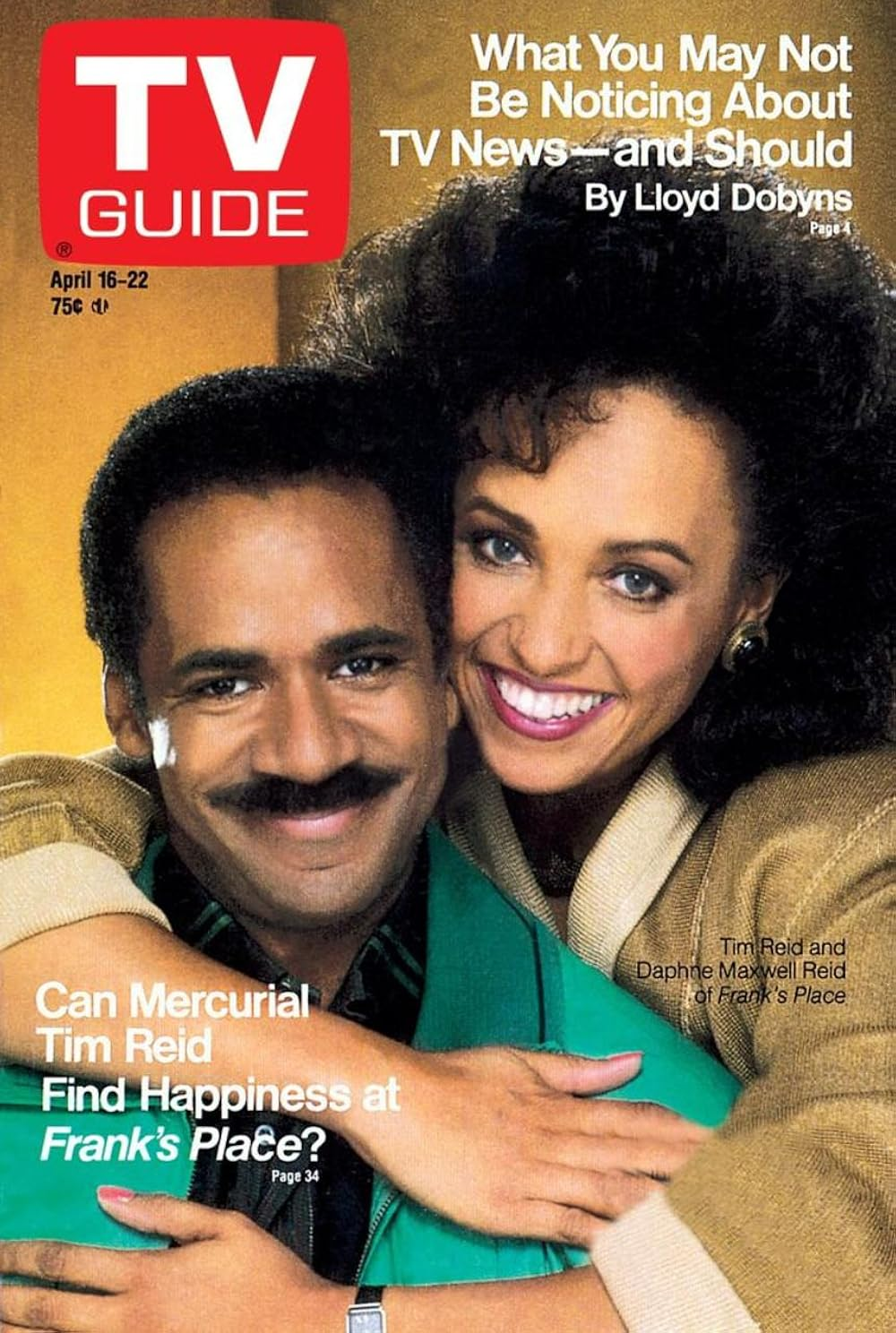
If there were a Mount Rushmore of 1980s television Black leading men, Tim Reid would be on it. WKRP in Cincinnati. Snoops. Frank’s Place. The first time I spoke to Tim Reid, I had just published an essay about Frank’s Place, and it was Frank’s Place that I wanted to talk about. How I think it’s one of the most important television shows ever produced—an early pioneer of the single camera, no laugh track format; an almost entirely Black cast and crew amid the overwhelming whiteness of 80s primetime television; nine Emmy nominations and three wins during its first and only season. Or how it’s one of the most vanished television shows ever produced—essentially erased from the zeitgeist when thin-skinned billionaire and CEO of CBS Laurence Tisch decided the season finale was about him and summarily cancelled Frank’s Place.
For those who don’t know (everyone), Frank’s Place was an American sitcom centered around a neighborhood Creole restaurant in New Orleans that aired on CBS during the 1987-88 season. The show’s sudden cancellation didn’t end Tim Reid’s career, but, in one fell swoop, Frank’s Place was forever (so far) banished to The Island of Billionaires Always Win (boy, good thing it’s forty years later and we no longer have to live our lives in daily fear of the whims and tantrums of thin-skinned billionaires).
It was a virtual interview. I was sitting in a room in the basement of my local library. Behind me was a wall-sized stained-glass window long ago salvaged from the dilapidated mansion that once belonged to the eccentric matchstick tycoon my hometown was named for. Tim Reid was in his study in Richmond, Virginia. On the wall behind him was a verdite bust of an African elder—an early work by artist Freeman Sithole. To Reid’s left, the most recent copy of Barrelhouse sat on his bookshelf right next to a copy of Gayle Jessup White’s Reclamation.
He sounded just like he does on television. His demeanor was smooth and effortlessly charming. His acting idol is David Niven. You can tell.
Yes, I very much wanted to talk about Frank’s Place. But, the thing is, you don’t really interview Tim Reid. You just kinda sit back, hold on, and let the self-described “Black Forrest Gump” take you on an incredible journey. We talked about a lot of things (most of which couldn’t possibly fit in the interview below). We talked art and politics. Culture and technology. We talked Emmett Till, Dr. Martin Luther King Jr., and Peter O’Toole. Irving Stone. Bob Barker. Maya Angelou. The Harlem Renaissance. The Italian Renaissance. And, yes, ultimately, we did talk about Frank’s Place. But when we first sat down, what Tim Reid wanted to talk about was Leonardo Da Vinci and Michelangelo.
Tim Reid: You know they hated each other. I don’t know if you know the history of the two, but they hated each other. I mean, Da Vinci tried to get Michelangelo assassinated.
Seth Borgen: Oh, I did not know that.
TR: The reason that Michelangelo became a sculptor was because of Da Vinci. When the Catholic Church was trying to commission someone to take this huge piece of marble and sculpt it, everybody tried. Da Vinci tried. Who else was there? Not Botticelli. Anyway, about three or four noted sculptors tried to get something out of this one piece of stone, and they all quit quickly into it. I think Da Vinci probably spent the most time, but he only got maybe eighteen percent, twenty percent into the stone. So, Michelangelo took it on just to spite him, and out comes the David. And when you study the work, so many things were done for the first time in sculpting, and that really pissed [Da Vinci] off. So then Da Vinci formed a group, a radical right group like MAGA, who was sponsored by the Catholic Church, to go against these radical Renaissance artists that were part of the Medicis’ art group. The Medicis or the Catholic Church probably commissioned all of the art done during that period.
SB: [stammering] Artists have always had complicated relationships with the privileged few in power, haven’t they? There are so many instances where wealthy elites and royalty were bankrolling the very art that was undermining the same systems perpetuating their wealth and power. Is it too much to say that Frank’s Place was just taking its place in a long and storied tradition?
TR: Perfect to say—because of Hugh Wilson [Creator and Co-Executive Producer of Frank’s Place]. I have not met many people the caliber of Hugh Wilson as a writer. Not only was he funny, but his vision of things was so sordid, so strange. I mean, he hated the aristocracy. He hated all those things which you’re saying. That was huge to his own demise. I mean, in terms of his career. But he was unusual, right? And Frank's Place was—he and I were probably the only two people who could come together and be defiant enough to go against the system, and being successful enough to get the opportunity to do Frank’s Place. It wore out at the end. We went too far. It was glorious to go that far.
SB: At the time, to what degree were you and Hugh aware that you were doing something revolutionary?
TR: From the very first day I read the pilot script. I called him and I said, without glee, I said, ‘Hugh, this is incredible, but I don't know about this. This is—Hugh, this is—.’ I kept saying incredible. ‘But it’s not television. It’s like culture.’ And he said, ‘I know, Timmy.’ He was the only person who ever called me Timmy. ‘But what do you think?’ I said, ‘I’m with you. I’m with you all the way.’
SB: And in a pre-cable, pre-Fox, pre-internet, pre-streaming landscape, this was a time where a sitcom on a network could really impact how mainstream America thought about things. For example, All in the Family and The Jefferson’s regarding class and race. M*A*S*H regarding war.
TR: I always say that if Frank’s Place had stayed on for say six years, five years, race relations in America would be different. Not necessarily better, but different. I think culturally there would be a wider acceptance of the history, the hidden history that now is popping up. I think there would have been more pride kept within the culture of Black America. Resurfacing I would say is a better word. I come from a completely segregated community. I never even spoke socially to a white person until I was a freshman in college. And Colortown, as it was called by the people in Norfolk [Virginia]. White folks. We call it home. They call it Colortown. It was an incredible place to grow up. There were seven movie theaters in walking distance of my house. Everybody I knew, Black, who had a shop, were the head of the shop. The drug store was run by Black folks or owned by them—some had two or three drugstores. The cafes. The bars. It was such a rich Black environment. All my heroes and the heroes that I would hear about, like Lena Horne, Count Basie, they used to come through Norfolk and perform. And of course they couldn't stay in hotels, so they stayed in these apartments. Stars would come through. They had the midnight ramble. I saw Moms Mably, Pigmeat Markham. So, my world was very segregated, not by our choice but by the system. But the entertainment, the visuals that we saw, were so powerful.
SB: And that was the zygote for Frank’s Place?
TR: The heart of the show, I think, was Hugh Wilson. The soul of the show was Black culture and race relations based on our stories.
SB: CBS picked it up. And despite the fact that there had never been anything like Frank’s Place on television, it got a full season, eventually garnering nine Emmy nominations and three wins. And the ratings were solid.
TR: Matter of fact, we were number one the week we were cancelled. By the way [laughing], are you in church?
SB: I thought you would appreciate this [gesturing to the stained-glass window behind]. I’m actually at one of my local libraries. I was born in this weird town called Barberton, Ohio, and Barberton was founded by this eccentric millionaire named O.C. Barber, who thought he could revolutionize agriculture, industry, towns, communities, and he used Barberton as his blueprint. He got about halfway done and died, and had no will, and everything that he had built was sort of in limbo for decades. He had this big, beautiful mansion, but Barberton couldn't afford to keep it up, and they eventually bulldozed it in an attempt to get a mall. Which failed. But this stained-glass window was saved from his mansion.
TR: Oh, okay [laughing]. I kind of like that guy. You ever hear of Pullman, Indiana?
SB: Yeah.
TR: It’s the same story. The guy who created, who built Pullman, built the town. That’s where they built all the Pullman cars, and where the Pullman porters—a lot of Pullman porters came out of Chicago in that area. And it had the Pullman Bank, had Pullman this, Pullman that, and I used to call on that on the Pullman Company when I was at Dupont for about a year before they all—I don’t know what it is now—but it was the same story. This millionaire family, the Pullmans. And when the train industry shifted in innovation, they lost their fortune. The town is just a shell of itself.
SB: On the subject of millionaires and billionaires deciding how we live—it’s covered in greater detail in the essay than it will be here, but the demise of Frank’s Place occurred during the season finale. The episode features a captain of industry who achieved their monumental wealth through the use of junk bonds. And because Laurence Tisch, the owner and CEO of CBS at the time, had used junk bonds to buy his way into the network, he took the episode as a personal insult.
TR: Junk bonds were beginning to take on a lot of negative energy in the economic world because of people like Tisch, who controlled so much. It’s like today and billionaires, Musk, and all these guys who are controlling AI. It’s the same thing happening, and they are doing it like these guys were doing it with junk bonds or debt. And then to have a show, as he said in the board meeting, ‘I’ll dare a show that I have on my network take a shot or talk about my financial—what I do with my money.’ He was very upset about that, and just told everybody. Everybody said, ‘No, no, you can’t do that. People love that show.’ He said, ‘I don’t care.’ And so he stormed out of the meeting, made the call, and then I got the call. Hugh got the call.
SB: Hm-hmm.
TR: That’s why, again, going back to your piece, what touched me so much was the duality of it. That it wasn’t just about Frank’s Place. It was about the impact of the money into the system. The impact of what was going on then and where we are now. That Oracle just bought CBS. They’ve ruined 60 Minutes, and it’s the same syndrome. Just the names have changed.
SB: Frank’s Place was cancelled, but it wasn’t just cancelled. It was, like, historically cancelled. Only two sitcoms from the 80s that received an Emmy nomination for best comedy series have never been released via tangible media or streaming, Tony Randell’s groundbreaking gay sitcom Love, Sydney and Frank’s Place.
TR: Wow, I didn’t know that.
SB: And Frank’s Place was the only show to receive an Emmy nomination for best comedy and not get a second season.
TR: I'll tell you what. I'll quote a line out of a movie about Van Gogh. A very wealthy man is saying to Van Gogh, ‘You’ve never sold a picture, a painting.’ Van Gogh says, ‘No, I’ve done hundreds. I've never sold one.’ [The wealthy man] said, ‘Why? How?’ ‘No one wants them.’ [The wealthy man] said, ‘Why are you still doing this? Obviously, it’s not successful.’ And Van Gogh said, ‘Sometimes the universe gives you talent, or whatever, but it says to you that it's not your time. That you are for the future.’ Well, Van Gogh is the only artist in the history of the art world who has his own museum [laughs]. Rembrandt doesn’t have one.
SB: Do you think Frank’s Place will ever get a proper release?
TR: They wouldn’t even sell it back to me. The rights.
SB: Who does own the rights these days?
TR: Viacom Productions—which is no longer. So, CBS and whoever holds the library. I tried to get it away from them. I had a partner, of course. He was over at Shout! Factory. He was a good friend, and he was the COO of it. He says, Tim, if we take Frank’s Place and then the other show I did about a bar, Linc’s, you have almost fifty, sixty episodes. We should do a whole thing around black bars and yada yada yada. I said, ‘Okay, if you can get the rights, I’m in.’ So he went in, pitched, I think, a million and eight or something like that. They turned it all down. They didn't want him to have it.
SB: I feel like I know the answer to this question, but at any point, were you and Hugh ever like, “Hey, maybe we should just try to make something that keeps us on TV for a while?”
TR: You know, I'm at the age now, not because I’ve earned it, but when you outlive so many of your people, you become an icon [laughs]. So, that comes from being a journeyman; surviving the business. It’s an evil business, to say the least. But a very important evil, and whenever any of us who have any light in us gets a chance to swing the bat, you know, you want to make contact.
SB: Well, we’ve covered a lot of ground. The past, the present, and the future. I appreciate you giving me all this time.
TR: Oh, my pleasure, man. I mean, I feel the same way about you. You awakened something in me at a time when I needed it. Because, you know, you get to this point. I’ll be—if I’m blessed—I’ll be 82 at the end of this year. And I never thought I’d live this long, that’s for sure. But when you look back on things, you know, you want to look back on something and not just think, Oh, that was a good time, but how it affected you. And that show was the brass ring. I mean, I didn’t get it, but it was there. I’ve seen it [laughs]. I often wonder what life would be like—not financially, but just psychologically—had that show gone on. I mean, I'm on Sister, Sister for six years. And it was a good show. It had a thing, but I can’t imagine six years on Frank’s Place. The things we would have done.
Seth Borgen’s first book, If I Die in Ohio, received the New American Fiction Prize. His work has appeared in Story, Harvard Review, Green Mountains Review, Water~Stone, and elsewhere. He has received a number of honors and prizes including the 15th Annual Terrain.org Fiction Award and a grant from the Ohio Arts Council. He has an MFA from the University of Mississippi. Currently, Seth is the Writer-in-Residence at Western Reserve Academy in northeast Ohio.