Chris and I crossed paths after his debut short story collection, "Give My Love to the Savages," released in 2022. As soon as I read the book, I knew I'd have to hit Chris up, and we quickly stitched together a friendship from email check-ins and sending each other our writing (Chris is the type of guy to immediately send you a copy of his book when he learns you're interested in his stories).
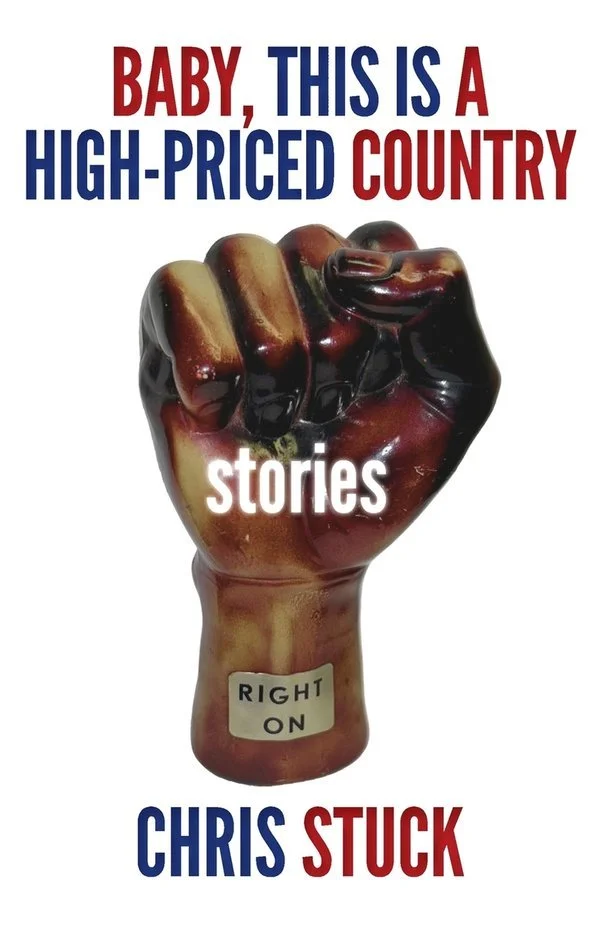
Chris has always been unafraid to speak on his career as a writer. In 2024, he launched a legendary Twitter tirade on the shortcomings of publishing from his experience with "Give My Love to the Savages." This time around, he's taking matters into his own hands, launching his own company, Black Heroics Book Co., and publishing his second short story collection, "Baby, This is a High-Priced Country." The collection spans everything from futuristic visions of cities hitting diversity quotients through Black androids to the precious need of friendship between two military veterans navigating their PTSD. It's wacky, raw, and, just like Chris, as real as it gets.
This interview has been edited for clarity.
CKC: So you’ve had two moments where you're like, I'm just going to tell the truth about my [publishing] experience. And like, I don't care if I'm hurting anybody's ego. You had that legendary rant on Twitter back in the day.
CS: Yeah, I kind of tried to remember some of it and put it on Substack. I bailed on Twitter, you know what I mean? But yeah. I just went off one day and was just like throwing out tweets and tweets and tweets. By then I was fed up. I was done, you know.
CKC: And then you had this recent essay for Zona Motel where you also shared more of your experience related to not having a lot of attention put on you from an editor. You're not even sure if they're reading your book.
CS: Right, right. I feel bad for airing out the editor like that but it kind of needed to be done. She's not the only one, you know what I mean? You start to hear stuff from other people and, and it just made me want to say, like, “man, none of y'all are saying this.” Like, do you know Nafisa Thompson Spires? She wrote Heads of the Colored People as a story collector. She must have seen some of those tweets. She DM’d me to say she had an editor that kind of did some of the same shit. So they're all just afraid to say stuff. They're afraid to get kicked out of the kingdom.
CKC: You started to realize at a certain point that it wasn't just specific to you. It’s endemic.
CS: Oh, yeah, definitely. Andrew [Boryga], he's like, “oh, man, it's too bad. My editor's great. My agent's great.” I'm like, yeah, you got lucky. I guess it worked out for you. He told me, “you need to hook up with my agent.” But I already had an agent. He's the only person that's ever tried to help me. Most people don't want to hook you up. They think you're going to take their spot.
CKC: There’s an interesting divide where there's both the scarcity mindset and then this obvious understanding that what we're doing is kind of a zero-sum game. No one’s getting rich off writing.
CS: I didn't tell him I had solicited his editor with the first book and that within 5 minutes, she gave me a no. At least she was honest, you know. I should have written a novel first. But you got to do what you do, what comes naturally.
CKC: I feel like what has been really inspiring by seeing you work on Black Heroics Book Co is that it’s been this springboard. Do you feel like you’ve been liberated in a sense? Like you have new enthusiasm for being able to put out these things in your way?
CS: Oh, yeah, definitely. Like, because the first book, I had no control over anything, man. The book, the cover. The edits were terrible. It's just this weird situation where you don't have control, but then if you want something to happen, you have to take control. Like you have to do your own book tour. And I realized, well, I don't even freaking want to be doing any of that anyway. You know what I mean? So yeah, it was totally liberating. But a lot of people don't get it, you know. They're just like, why would you do that? Just because it's “illegitimate” unless it's with a big publisher or a known publisher or whatever.
CKC: There's an idealized vision of what the big publishers do for you. But you had that experience and you had to set up your own book tour.
CS: Right, right. Yeah, definitely.
CKC: How much do you feel like it ended up adding to your first book?
CS: It's hard to say. A friend of mine published a novel maybe like a year or two after my first book, and he didn't do anything. The publicity team said, “you could do readings if you want, but it doesn't really move the needle that much.” His book didn't do that great anyway, but who knows. A lot of people set up publicists and spend like 10, 15 Gs and nothing happens. Sometimes you can win a big prize and it doesn't do anything either. I don't know if that stuff moves. I feel like we're in like late-stage literary culture now. People don't think about writers or books in the same way they did even 10 years ago, you know?
CKC: That's a great term for it. There's a weird catch-22 associated here—your book needs the support of the people at the publishing company to have that springboard, but they're only going to give you the support if they decide to choose it.
CS: My agent was self-aware. He would say it's counterintuitive. If they [publishers] see something struggling, they'd rather they just cut ties with it instead of funneling some money or trying to help it. They're only going to help the things that are already doing well. That's what everyone says about music labels now. If something's hot, they'll throw more money at it. But if it's dying, they cut bait and get the hell out of there. You know what I mean? Whereas maybe back in the day, they would do the opposite, which would make more sense.
CKC: I'm not versed enough in media studies to be able to expand on this—but you know, there's a similar thing happening with the same movie franchises getting pumped up and remakes and sequels as opposed to independent work being rewarded. Which means everybody's got to make Avengers 8. There's some parallel here between the risk and media that we're propping up as a culture and what we're willing to support.
CS: Yeah. I mean, maybe it's always been that way and it just seems worse now. But I don't know. How would Wu Tang and any of those come out if it wasn't the opposite at some point? If they [labels] weren't willing to take risks or, you know, certain movies?
CKC: It's sad. But I will say this. It is cool and inspiring watching this video of you using—what was it? InDesign? Making the cover and putting together your product. It seemed like it was a fulfilling process.
CS: Oh, definitely. I like how old books used to look back in the like 80s and 70s with negative space, a stark image and just the name of the book and the writer's name and that's it. Now, a lot of book covers look the same. And you got to get the dopest blurb and that's going to be on the front. I've been even seeing it with small press people. They'll get some big writer’s blurb as if it’s more important than the freaking title on the book. I just don't get that. But it was fun to do it and to go through the revision process. I was doing too much at first. Like I had the fist thing sitting on some money, like a stack of money.
CKC: When I'm reading your book and I know you designed the cover and you published it, it gives me a sense of getting from you the true, unfiltered experience. I'm not getting something that's calculated from a publishing company according to their trends. And something about it brings me back to the culture of trying to sell a mixtape on a corner. So I guess my question with all that is: do you feel like this has been empowering to you? In having this control?
CS: Oh yeah definitely. I sort of picked some brains and talked to some people that had small presses and just figured out how they did it and then I was able to come up with my own little process for it. It made me want to go as hard as I could. I just wanted to be like, “this is all me.” This isn't me trying to please anyone or not step on toes or not say the wrong thing. It made me reveal my complete self, I think. Because I cuss—I have freakin’ dark thoughts. I can put all that stuff out there. Fuck with it or don't, I don't care, you know. I'm not a big press dude, you know, I'm small press, you know? I'd have probably given away a bunch of copies just to get them out there. You're not making money at this anyways unless you're Colson Whitehead or Mateo [Askaripour].
CKC: You don't have to be afraid of pushback from somebody who's involved in this different publishing domain—your editor, your agent. The word you used earlier was “kingdom”—people are scared of getting kicked out of the kingdom. What do you feel allowed you to let go? Because what you're doing is not common.
CS: I'm still surprised myself, truthfully, because at first, even with the first book, my agent, my editor and I—we were bumping heads like crazy, right? During that whole time, I was just surprised that I was actually standing up for myself. I mean, I always knew this about myself. I've always been more underground, more whatever. I'm not into punk rock, but I guess you'd call it punk rock—subversive, anti-establishment stuff. I always bring everything back to hip hop. I've witnessed when a rapper gets a big music deal and then washes out and then stays on the underground putting out their stuff in a purer way—someone like MF Doom. I don't know why some people just don't have that fighting spirit. They're afraid. They want the attention and they want the love. And I just never gave a shit about that. Even with the first book, I didn't care about sales or any of that stuff. I just wanted the book. Once I realized that, that made this leap to the Black Heroic stuff even easier, because really, I just want the book and I want to design the book. I want it to be my stuff.
CKC: I imagine it’s also like, what's the type of writing that you want to produce, you know? Did you feel like you were able to be bolder when you knew there were no guardrails put on you?
CS: Yeah. Once I decided to do this, I went in and redid most of the stories in here and kind of like stuck my foot in them a little bit more than I probably did before. Like even in that first collection [Give My Love to the Savages], with that dick story [laughs], I was like, people are either going to ignore this or they're going to think this is genius. And it flew under every radar that there was. So at some point when you know they're not paying attention to you, that means you could just do whatever the fuck you want. And I feel like some of these people who are sort of beholden to corporate publishing are kind of calculating what they're doing too much. And it's not art. It's more like narratives and content. Whereas I wanted to make what I consider a piece of art, you know what I mean? So yeah, if they're not paying attention, you can do whatever you want and it makes you kind of want to scream even louder.
CKC: I'm trying to manifest 1% more of what you have. I'm over here pondering, “what if I said the F word in the story?”
CS: I don't feel like I'm some brave person or anything at all. Maybe I just listened to way too much hip hop, but in hip hop, it was like, I don't care how much you sold—you’re wack. I'm better than you, all that stuff. I mean, not trying to be like that, but in my head, I'm thinking like that.
CKC: You're somebody who can go from the most surreal, heightened reality —you're inventing technologies, the Humanoids of Love Meadow, New York, Electronic Negro. But then you also have very reality-based, literary short stories, like Every Marine is a Rifleman. Which—that's a tearjerker. When you're putting together your collection, what do you think is leading you towards one of those ends or another? What's inspiring you to think, “I want to do something that's very playful, inventive” versus “I'm going to do a little bit more about the default literary”?
CS: I kind of go back and forth. That's how inspiration works for me. I grew up reading just straight realism, you know. And I want to mix it up and I want to feel the creativity—not just presenting the world back to me or anything, you know what I mean? I'm always looking for something different and something I've never seen before, never heard of. And in some way, even just a realism story about Black folks, like some old Black folks breaking up and then their love lives are all weird—that could be new because you don't really see that stuff. I mean, it's not really done very often. It's one of those things where I got to write the books I want to read because no one else is fuckin’ writing them. But I think that's just the sides of me. There's realism and then there's absurdity, surrealism.
CKC: How important do you feel like it is for you to test your boundaries with each story and to really try to get into a new sphere?
CS: That's all I'm thinking about, even with the more mundane ones. Sometimes I want to see how far I can spin out a story and see if it'll come back around or if I can make it come back to a real moment. And you know, sometimes it doesn't come back. But the problem is it doesn't really fly with editors because they're like, “what is this? I can't sell this to Jenna Bush.” I've been through enough situations where I was trying to reverse engineer what editors wanted and still be able to do what I want to do. And that shit didn't sit right with me, you know? So I was just like, I gotta just be a fuckin’ weirdo and do what I do and just entertain myself.
CKC: We're getting the unfiltered Chris Stuck.
CS: That's all I've wanted ever wanted to be. There's this one rapper, Suga Free. He said, “When I was a kid, I always dreamed of being this good.” In my head, I always wanted my shit to be a certain way. And I feel like now I'm closer every day. I keep doing it. I get closer and closer to that.
CKC: That's such a strong image to hold—turning into the artist that you feel like the earlier version of yourself would have wanted you to be.
All right. What is your favorite movie with Patrick Swayze?
CS: Oh, why? My favorite movie of Patrick Swayze. Wow. Well, there's that one with Keanu Reeves. Point Break. I think that one's pretty cool. Yeah, I think I'm gonna go Point Break.
Chris Stuck is the author of Give My Love to the Savages: Stories (2021), a finalist for the PEN/Robert W. Bingham Prize and the Oregon Book Award. He is a Pushcart Prize winner, a two-time Fine Arts Work Center fiction fellow, and a two-time Orgeon Literary Arts fiction fellow.
His second collection of short stories, Baby, This is a High-Priced Country, released on September 22nd under his own press, Black Heroics Book Co. More info on Chris—and links to buy his book—can be found at his website, https://www.chrisstuck.com/.